
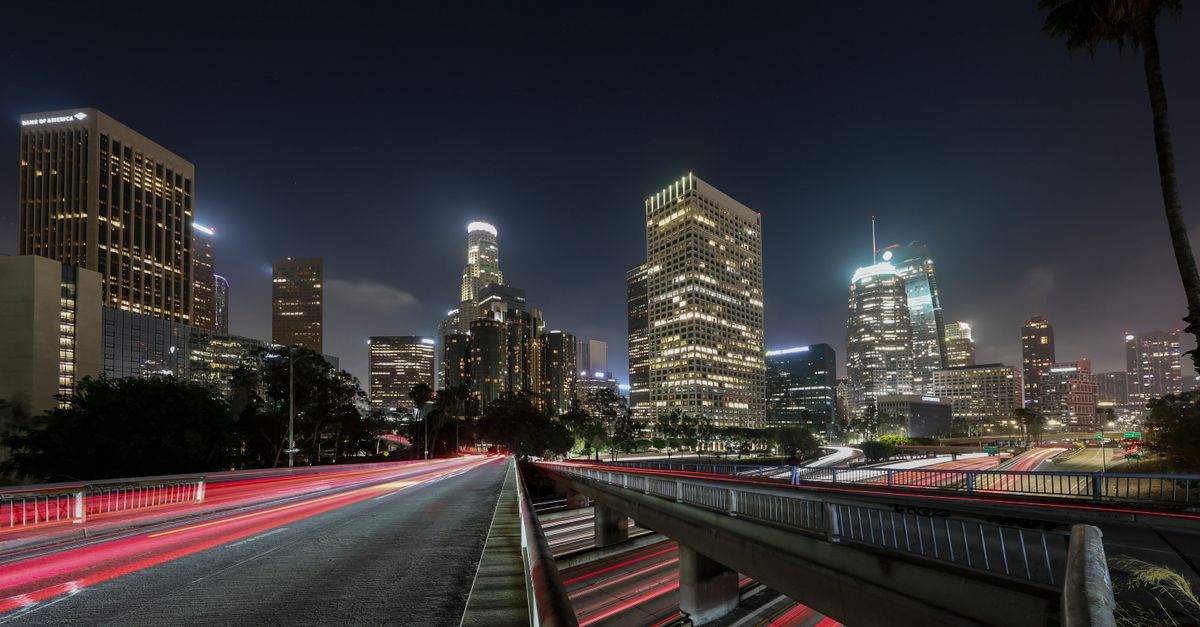
Because the Los Angeles metro area is so large, roughly 4,000 square miles across Los Angeles County alone, with dozens of independent cities and school districts inside it, there is no single "LA school system" the way there is a single NYC Department of Education. Los Angeles Unified School District (LAUSD) is the dominant public district within the city itself, but families in Pasadena, Santa Monica, Burbank, Long Beach, and dozens of other cities in the metro are served by entirely separate districts. That fragmentation matters enormously for anyone trying to map out Montessori options here.
Los Angeles Quick Facts
| Category | What to Know |
|---|---|
| Notable public option | LAUSD's magnet program system, over 300 magnet schools districtwide, some using Montessori or Montessori-influenced methodology; admission through the district's point-based eChoices system |
| Typical private tuition (toddler/preschool) | Statewide California average roughly $13,000 to $14,000, with the Westside and other high cost-of-living pockets of LA running above that figure |
| AMI/AMS training presence | Montessori Western Teacher Education Center (MWTEC), an AMS/MACTE-affiliated training center that has operated in Southern California for more than four decades |
| Distinctive local fact | LA County spans roughly 4,000 square miles and dozens of separate school districts, so commute radius, not district boundary alone, usually drives which schools are realistically reachable |
The Montessori Landscape in Los Angeles
Private Montessori schools are well established across nearly every part of the LA basin: the Westside (Santa Monica, Culver City, Brentwood, Mar Vista), the San Fernando Valley, Pasadena and the San Gabriel Valley, and the South Bay (Torrance, Manhattan Beach, Redondo Beach) all have a meaningful concentration of Montessori preschools, and elementary-level Montessori programs, while less common than preschool-level ones everywhere in the country, exist in most of these areas too. Because Los Angeles is car-dependent and traffic-bound in a way few US cities are, "nearby" for an LA parent often means something different than it does elsewhere, a school ten miles away can be a twenty-minute drive or a fifty-minute one depending on the freeway and the hour, which makes proximity and commute time a bigger factor in choosing a school here than in most metros.
Public Montessori Options in Los Angeles
LAUSD runs one of the largest magnet school systems in the country, more than 300 magnet programs districtwide, originally established as part of a court-ordered effort to voluntarily integrate the district's schools, and some of those magnet programs use Montessori or Montessori-influenced methodology as their instructional theme. Because LAUSD's magnet offerings and their specific pedagogical themes shift from year to year, and because admission runs through the district's centralized point-based magnet application system (through LAUSD's eChoices portal) rather than simple zoning, the most reliable way to see what is currently offered, and where, is to search LAUSD's own magnet directory rather than relying on a fixed list of school names. Beyond LAUSD, several independent charter schools across LA County also describe their instructional approach as Montessori or Montessori-inspired; charter authorization and enrollment rules vary by school and by the specific chartering district, so again, checking current status directly is the safer approach for any specific family's planning.
Private Montessori Schools in Los Angeles
Because the metro is so large and multi-centered, families generally do best treating LA less as one Montessori market and more as several smaller, regional ones: the Westside market is distinct from the Valley market, which is distinct from Pasadena and the San Gabriel Valley, which is distinct from the South Bay. Within each of those areas, private schools range from small home-based infant and toddler programs to larger, multi-classroom campuses running primary and, less often, elementary classrooms. As everywhere, AMI or AMS accreditation is the clearest single indicator that a specific school is following the authentic Montessori method rather than borrowing the name for a general play-based preschool.
What Tuition Typically Looks Like Here
California private Montessori tuition for toddler and preschool programs commonly averages somewhere in the $13,000 to $14,000 range statewide, but Los Angeles itself, and especially the Westside and other higher cost-of-living pockets of the metro, tends to run above that statewide figure, more comparable to other major coastal metros than to smaller California cities. Infant and toddler programs typically price at the higher end of any school's range, and elementary tuition, where offered privately, is usually priced noticeably above preschool tuition at the same school. As with every city, treat any single number as a starting reference point rather than a quote, actual tuition depends heavily on the specific school and neighborhood.
How to Find an Accredited School Near You
Given how spread out the region is, the most efficient approach for an LA-area family is usually to narrow first by commute radius, then check accreditation. Start with AMI's school locator (amiusa.org) and AMS's school locator (amshq.org), both searchable by ZIP code, to find accredited private options within a realistic driving distance, check LAUSD's eChoices magnet portal (or your specific city's district site, if you live outside LAUSD boundaries) for current public magnet offerings, and see the National Center for Montessori in the Public Sector (public-montessori.org) for background on public Montessori growth in California generally. The general walkthrough at how to find a Montessori school covers what to ask once you've narrowed a shortlist, and AMI vs. AMS explains what those two accreditations actually guarantee.
What makes Los Angeles different
In a metro this large, the single most important filter is not "which school is best" but "which schools are realistically within my commute radius," since LA traffic can make a highly rated school an hour away functionally worse than a solid school fifteen minutes away. Families here generally benefit from deciding on an acceptable commute time first, then comparing accreditation, philosophy fit, and cost among the schools that actually fall within it.