
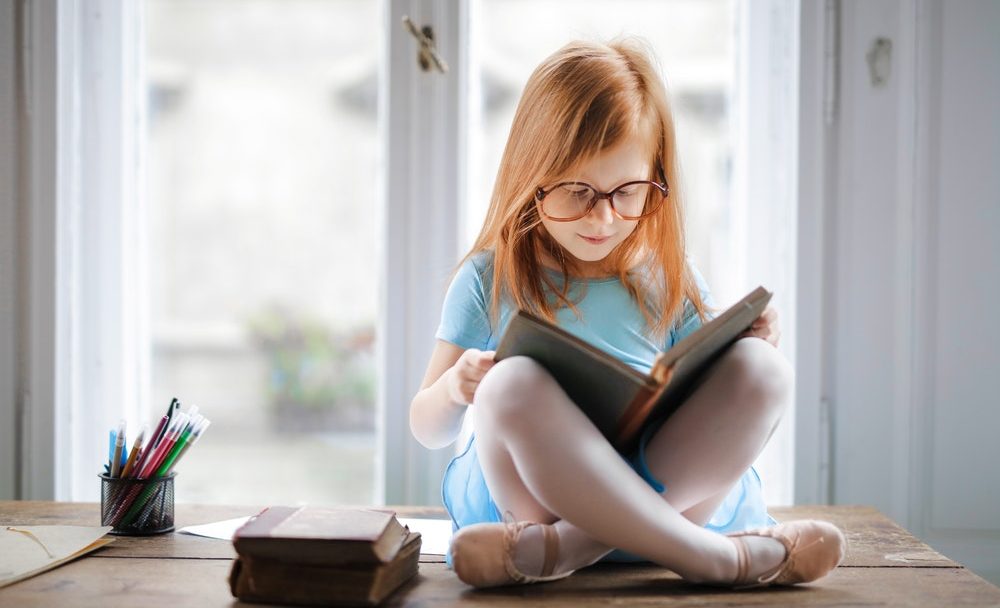
Maria Montessori did not treat elementary-age children as older versions of preschoolers who simply needed harder materials. She argued that somewhere around age six, children undergo a genuine shift in how their minds work, what she called the second plane of development, and that a classroom designed for a three-year-old's needs would actively frustrate a seven-year-old. Everything distinctive about Montessori elementary follows from taking that shift seriously.
The Second Plane of Development
Montessori described child development as unfolding across four six-year planes, each with its own psychological character. The first plane (birth to six) is the one most people associate with Montessori: a period of sensory absorption, movement, and order, where the child builds themselves through direct physical experience of the environment. The second plane (six to twelve) is different in almost every respect. The elementary-age child is no longer primarily interested in the immediate, concrete environment. Reasoning, imagination, and moral questioning switch on. The child wants to know why, not just what, and wants to understand how the parts of the world connect to each other, not just what each part is called.
Montessori also observed that six-year-olds develop a strong pull toward the social group and toward moral concepts like fairness. A first-plane child is content working alone at a mat on the floor. A second-plane child wants to work with friends, form clubs, negotiate rules, and figure out where they stand in relation to their peers. A classroom that ignores this shift, that keeps demanding solitary, sensory work from a child who is hungry for reasoning and social connection, fights the child's actual developmental agenda instead of supporting it.
How Elementary Differs From the Primary Classroom
Anyone who has watched a Montessori primary classroom (ages 3-6) in action and then walked into the elementary room next door notices the contrast immediately. The primary room is quiet, orderly, focused on precise, repeatable, largely individual work with concrete materials. The elementary room is busier and more conversational. Children work in twos and threes at large tables, argue amiably about a math problem, spread a timeline across the floor, or huddle around a laptop or reference book researching a question that came up during a lesson three days earlier.
The materials shift too. Elementary still uses concrete materials, Montessori never abandoned the concrete-to-abstract principle, but the materials exist to launch abstract reasoning, not to be an end in themselves. The Golden Beads that taught a four-year-old the concept of a thousand become, in elementary, a springboard into abstract equations the child can eventually do entirely in their head. Where a primary material isolates one quality, an elementary material typically opens a whole line of inquiry the child pursues independently for days or weeks. For more on how the earlier stage sets this up, see the overview of Montessori for ages 6-12.
| Dimension | Primary (3-6) | Elementary (6-12) |
|---|---|---|
| Primary work mode | Largely individual, one child and one material at a mat or table | Largely small-group, two or three children researching together |
| Curriculum centerpiece | Sensorial materials that isolate a single physical quality (size, color, texture) | Cosmic education and the Five Great Lessons, opening broad interconnected research |
| Role of materials | The material is largely the point: mastering it is the work | The material launches abstract reasoning that continues without it |
| Typical noise level | Quiet, concentrated, one child at a time speaking softly | Conversational, several small discussions happening at once |
| Leaving the classroom | Rare; the prepared environment is the whole world | Regular "going out" trips, planned by the children, into the community |
| Social orientation | Parallel play and independent work alongside peers | Active peer collaboration, group projects, and negotiated rules |
Cosmic Education and the Great Lessons
The centerpiece of the Montessori elementary curriculum is a sequence Montessori called cosmic education, delivered through five foundational stories known as the Great Lessons. Told at the start of each school year with dramatic presentation, timelines, and often simple experiments, each one is intentionally broad and awe-inspiring rather than detailed, and each seeds dozens of follow-up questions that children then research individually or in small groups over the following weeks.
| Great Lesson | What It Covers | Typical Follow-Up Research |
|---|---|---|
| 1. The Coming of the Universe and the Earth | The formation of the universe, the solar system, and the physical earth | Astronomy, the states of matter, geology, and volcanoes |
| 2. The Coming of Life | The emergence and evolution of life on earth | Biology, ecosystems, botany, and zoology |
| 3. The Coming of Humans | Human origins and the fundamental human needs met across every culture | History, anthropology, and geography |
| 4. The Story of Writing and Communication | How spoken and written language developed over time | Grammar, etymology, and the history of alphabets and scripts |
| 5. The Story of Numbers | How number systems and mathematics developed across civilizations | Math history, number bases, and early counting systems |
The purpose is not simply to teach content. Montessori's idea was that if a child understands their place in an enormous, interconnected, ancient story, geological time, biological history, human history, they develop what she called a sense of gratitude and cosmic responsibility: an understanding that everything is connected and that their own contribution matters within that whole. In practice, cosmic education is also what makes Montessori elementary academically expansive. A single Great Lesson about the coming of life can branch into biology, ecosystems, extinction, geologic time, and eventually a child-led research project on a specific era or species, all self-directed, all growing out of one initial story.
Group Research and Going Out Into the Community
Because the second-plane child is drawn to peers and to reasoning rather than solitary sensory work, Montessori elementary classrooms lean heavily on small-group research. A guide gives a short lesson to two or three children, then those children pursue the topic together: reading, note-taking, building a model, preparing a presentation to the rest of the class. Group work is not a supplementary activity bolted onto individual study, as it might be in a conventional classroom. It is a core teaching method, because working through a real question with peers is how the second-plane child actually wants to learn.
Montessori elementary classrooms also practice what is usually called "going out": small groups of children, with a chaperone but without constant adult direction, leave the classroom to pursue a specific research need, a trip to a library for a book the classroom doesn't have, a visit to a business to interview someone about how it operates, a trip to a museum or a natural site connected to a current project. Going out is planned by the children themselves, including logistics like transportation and timing, under adult supervision. It is one of the more distinctive and, for some parents, initially surprising features of authentic Montessori elementary programs, and it exists specifically because second-plane children need real responsibility and real contact with the wider world, not just simulations of it inside a classroom.
The Lower Elementary and Upper Elementary Classrooms
Montessori elementary is normally split into two three-year classroom communities rather than one six-year span: lower elementary (ages 6-9) and upper elementary (ages 9-12). As with the multi-age model at every level, each classroom mixes three grade levels together, so a child stays with the same guide and many of the same peers for three years before moving up, and always has both older role models and younger children to mentor.
Lower elementary work still includes a good deal of hands-on materials work and shorter, more structured research projects, appropriate to six-, seven-, and eight-year-olds who are just beginning to reason abstractly. Upper elementary shifts further toward abstraction, longer independent research, more complex group projects, and more student-driven planning of their own time. By the end of upper elementary, many Montessori twelve-year-olds are managing multi-week independent projects, giving prepared oral presentations, and doing academic work that would look advanced by conventional-school standards, not because they were pushed, but because the structure gave abstract reasoning years to develop on its own timeline.
How Academic Work Deepens
Because cosmic education ties every subject into a single interconnected story, subjects are far less siloed in Montessori elementary than in a conventional school. A study of ancient Egypt might move through geography, timeline work, hieroglyphics as a bridge into the history of writing, math problems drawn from Egyptian units of measure, and art. Math itself progresses from the concrete Golden Bead work carried over from primary into abstract operations, fractions, decimals, and eventually algebra for children who are ready, using a sequence of materials, the Checkerboard, the Bead Cabinet, the various fraction materials, that keeps abstraction grounded in something the child can still see and touch until the concept is secure.
Reading and grammar move from the phonetic reading mechanics built in the primary years into literature, research writing, and Montessori's own distinctive grammar symbols, which represent parts of speech as shapes rather than labels, letting children analyze sentence structure visually before they can name every grammatical term. Across every subject, the guide's role continues to be presentation and connection rather than direct instruction: giving a lesson that opens a door, then stepping back while children walk through it at their own pace, individually or in their working group.
What to look for when visiting an elementary classroom
An authentic Montessori elementary classroom should feel purposeful but not silent. You should see children working in small clusters more often than sitting in rows, evidence of long-term projects in progress (timelines, research folders, presentations pinned up), and a guide moving between groups giving short lessons rather than lecturing to the whole class. If a program markets itself as Montessori elementary but the day is dominated by whole-class instruction, worksheets, and desks facing forward, ask specifically about cosmic education, going out, and how group research is structured before assuming the label matches the method.