
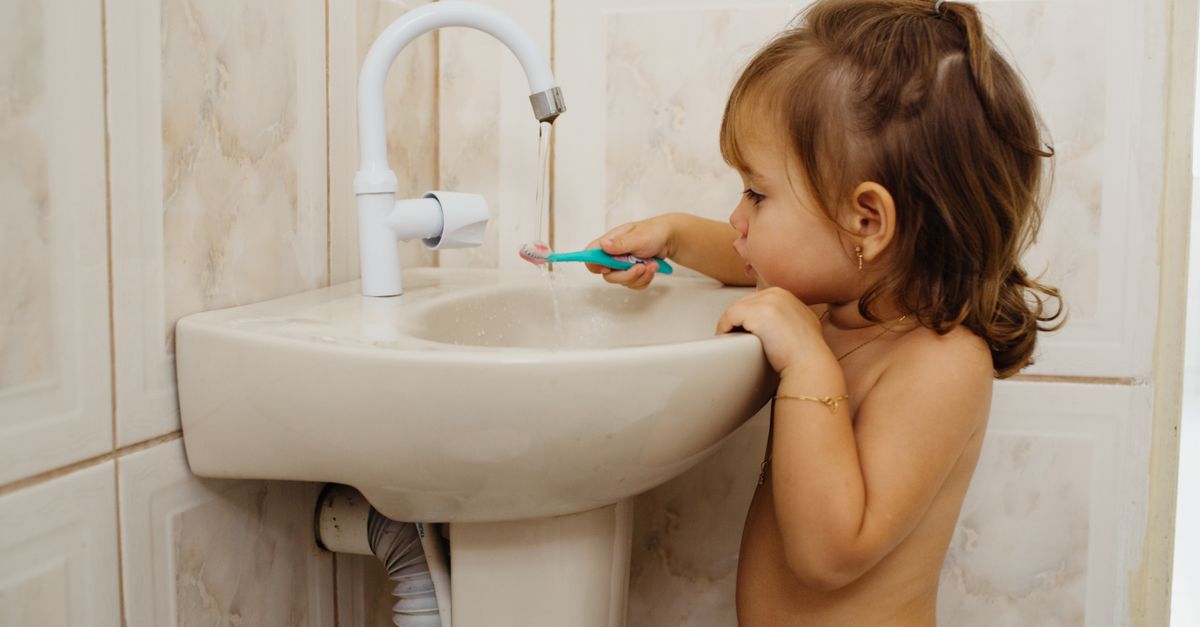
Every Montessori classroom in the world, regardless of culture or geography, begins its curriculum with practical life. This is not a warm-up. It is the foundation. The attention span, fine motor control, hand-eye coordination, and inner discipline developed through practical life work are exactly the capacities required for everything that comes later, reading, writing, mathematics, and all of it.
What practical life actually is
Practical life activities are real, purposeful tasks drawn from daily household life, adapted to the child's physical scale and developmental level. The work is real, the materials are real, and the outcomes are real. This is what distinguishes practical life from crafts or pretend play.
When a four-year-old in a Montessori classroom carefully pours water from a small ceramic pitcher into a cup, they are not practicing pouring. They are pouring. The water is real. If they spill, they mop it up with a real cloth. The task has a beginning, a middle, and an end. It can be done well or poorly. It produces a genuine result. This is completely different from filling a plastic cup with sand in a sensory bin.
The four categories
Care of the person
Activities that develop the child's ability to care for their own body and appearance:
- Washing hands (the full sequence: turn on water, soap, scrub, rinse, turn off, dry)
- Dressing and undressing, using the dressing frames to practice buttons, zippers, snaps, laces
- Combing hair, brushing teeth
- Blowing nose and disposing of tissue properly
Care of the environment
Activities that develop responsibility for and connection to the shared spaces we live in, part of the broader picture of Montessori chores by age:
- Dusting shelves and surfaces
- Sweeping with a child-sized broom and dustpan
- Mopping a spill with a sponge
- Watering plants and removing dead leaves
- Polishing wood, metal, or shoes
- Washing dishes (real, breakable ones, that's the point)
- Setting and clearing the table
Preparation of food
Perhaps the richest category for development, and the one parents are most nervous about. Setting up a designated preparation space in your kitchen, even a low shelf at child height with their tools and a small cutting board, makes this whole category accessible daily. The Montessori kitchen guide shows exactly how to do this by age, from the 18-month-old who pours their own water to the five-year-old who slices their own fruit.
- Cutting soft fruit with a child-safe knife (banana, strawberries, kiwi), from age 2.5 to 3
- Peeling hard-boiled eggs, carrots with a peeler, oranges by hand, from age 3
- Cracking eggs: from age 3.5 to 4, with practice and patience
- Grating cheese, carrots, or zucchini, from age 4
- Spreading butter, hummus, peanut butter on bread, from age 2.5
- Measuring and pouring dry and liquid ingredients: from age 4
The food is eaten by the family. That is not incidental. The child's contribution has real value, and they know it.
Grace and courtesy
The social dimension of practical life, learning the forms that make community possible:
- How to greet an adult (eye contact, name, appropriate physical greeting)
- How to interrupt a conversation politely (place a hand on the adult's arm and wait)
- How to enter and exit a room quietly when others are working
- How to offer help, accept or decline gracefully
- How to apologize and make amends
Grace and courtesy lessons are given directly, role-played together, and then practiced in real situations. They are not a list of rules, they are social skills, and they are taught with the same care and respect as any academic skill.
Why practical life builds academic capacity
The connection between practical life and academic learning is not metaphorical, it is neurological. The fine motor control developed through pouring, sorting, and folding is the same control required to hold a pencil. The sustained attention developed through completing a three-step task is the same attention applied to working through a math problem. The precision developed through transferring small objects with tongs is the same precision applied to placing letters on the Movable Alphabet.
Maria Montessori observed that children who spent significant time in practical life activities developed a quality of concentration that she saw in no other context, a deep, voluntary, satisfying engagement that looked like what adults call "flow." She called this state "the polarization of attention," and she considered it the most important single thing a Montessori education produced. Practical life is where it usually first appears.
The long-term arc of practical life, developing a child who can dress themselves, prepare a snack, and care for their environment without adult intervention, is what Montessori calls fostering independence. The practical life activities are its most direct vehicle, and the morning routine is the place where most families see the payoff most clearly: when a five-year-old can dress, eat breakfast, and pack their bag before a parent needs to intervene, years of practical life work have done their job.
Starting at home today
You don't need special Montessori materials to start practical life at home. You need: real tasks that need doing, tools scaled to your child's hands, enough time to let them do it at their pace, and the discipline not to redo it perfectly afterward. That last part is hardest, and most important.