
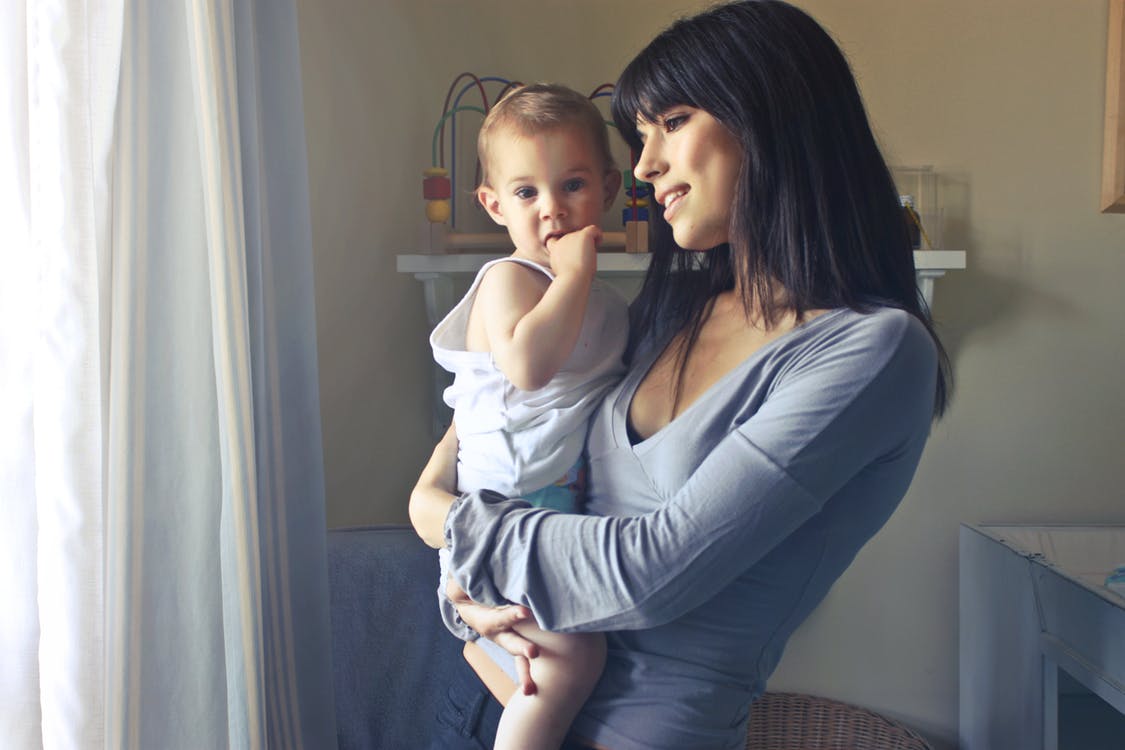
Emotional development in the Montessori framework is not primarily about teaching children to manage their feelings in the sense of suppressing or performing them. It is about creating conditions in which healthy emotional experience and expression are possible, providing children with the vocabulary and social understanding they need to navigate their emotional lives, and modeling the kind of emotional regulation that children eventually internalize. The classroom and home environment both play active roles in this process.
The connection between environment and emotional regulation
One of Montessori's most durable insights was that children's behavior, including their emotional behavior, is heavily influenced by the quality of their environment. A child in a chaotic, unpredictable, overstimulating environment will be more emotionally dysregulated than the same child in a calm, orderly, predictable one. This is not a character statement about the child. It is a straightforward observation about how human nervous systems respond to their environment.
The Montessori prepared environment is designed with emotional regulation in mind, whether or not that framing was always explicit in Montessori's own writing. The calm aesthetics, the order, the predictable daily rhythm, the freedom of movement, and the absence of forced social performance all reduce the baseline regulatory load on children. A child who is not spending constant energy adapting to an overwhelming environment has more regulatory resources available for the actual challenges of the day.
For parents implementing Montessori at home, the implication is clear: emotional regulation starts with the environment. A calmer, more ordered, more predictable home is a home with fewer meltdowns, not because the rules are stricter, but because the baseline demand on the child's regulatory system is lower.
Grace and courtesy: the explicit emotional curriculum
The Montessori primary classroom includes a specific set of lessons called grace and courtesy. These are not manners lessons in the conventional sense, though they do address polite behavior. They are lessons in the social-emotional behaviors that allow a community to function harmoniously: how to greet someone, how to ask for help, how to interrupt politely, how to offer assistance, how to handle conflict with words rather than action.
These lessons are taught through demonstration and role-play in the same way Montessori materials are presented: the guide demonstrates the behavior clearly and specifically, the child observes, and then the child practices. "When you want someone to move so you can pass, you say 'excuse me' and wait for them to step aside. Let me show you." The behavior is made concrete, observable, and practicable rather than simply told as a rule.
For parents at home, the equivalent is explicit, patient modeling of the specific social-emotional behaviors you want your child to develop. Not telling them "be polite" but demonstrating what polite looks like in specific situations, repeatedly, without the expectation that they will get it right immediately.
Naming emotions without performing them
Research in emotion science consistently supports the finding that naming an emotional experience reduces its intensity: "putting feelings into words" activates the prefrontal cortex and reduces activity in the amygdala. The practice of naming what a child is feeling is not just empathetic. It is neurologically supportive of the regulation the child is being asked to develop.
The Montessori approach to naming emotions is quiet and non-dramatic. The adult observes the child's state, names it accurately and briefly, and then allows the child space: "You're really angry right now." Not "Oh you poor thing, you're so upset, tell me everything that happened, it's okay, it's okay." The over-response to the child's emotion can itself become dysregulating, communicating that the emotion is an emergency rather than a passing state the child can move through.
The vocabulary of emotion belongs to the child, not the adult. Regularly naming the emotional experiences the child appears to be having, across the full range of emotions including positive ones, builds the child's emotional vocabulary. A child with a rich emotional vocabulary is a child who can express what they are feeling in words rather than only in behavior.
The role of concentration in emotional development
One of the most important contributions of Montessori education to children's emotional health is rarely discussed in emotional development terms: it is concentration. Maria Montessori observed that children who had experienced deep concentration, true absorption in a self-chosen activity, emerged from that state calmer, more settled, and more emotionally available. She called this normalization, the same term she used for the calm, cooperative behavior that emerges when a child's drive toward independence is fully supported.
Research in developmental psychology supports this. Children with better executive function, including the capacity for sustained attention, consistently show better emotional regulation. The relationship is bidirectional: better emotional regulation supports concentration, and concentration supports emotional regulation. The Montessori work period, which is designed to support deep, sustained concentration, is simultaneously supporting emotional development, even when it does not look like an emotional development activity.
Responding to big emotions at home
Montessori's broader approach to discipline shapes its response to a child's strong emotion at home, drawing on a few core principles:
- Stay regulated yourself. A child in emotional distress is looking for a co-regulatory partner. An adult who matches the child's dysregulation escalates. An adult who maintains genuine calm offers the child's nervous system something to regulate toward.
- Don't try to solve it immediately. A child who is crying, screaming, or melting down cannot process problem-solving, explanation, or consequence in that state. Wait until the flood has passed. Then, if it is needed, address the situation briefly and calmly.
- Acknowledge the feeling before the situation. "You're really disappointed" before "but we do have to leave now." The feeling acknowledgment is not a prelude to the explanation. It is the important part. The explanation is secondary.
- Allow the emotion without rescuing from it. A child who is sad does not need to be immediately cheered up. A child who is frustrated does not need to be immediately relieved of the frustrating challenge. Allowing emotions to be felt and to pass, without treating them as emergencies, teaches the child that emotions are survivable. That is an important lesson.
Emotional development and conflict between children
The Montessori multi-age classroom produces a constant low-level environment for social-emotional learning, because children of different ages and abilities must negotiate the use of shared materials and shared space all day. The guide's role in conflicts between children is to help them develop the capacity to resolve conflicts themselves, not to be the arbiter of every dispute.
The technique is to bring the children together, ask each one to express what happened and how they feel, and then ask each what they think should happen next. The guide facilitates the conversation without imposing a resolution. The children generate the solution. This process is slow and requires patience from the adult. But a child who has negotiated their way through a conflict with a peer using words, with adult facilitation, has developed something a child who simply had the conflict resolved by an adult has not.
The emotion library
One of the most effective tools for supporting emotional development at home is a simple collection of books about characters experiencing specific emotions: frustration, jealousy, disappointment, excitement, grief, confusion. Reading about a character who feels something the child has also felt builds the child's emotional vocabulary and normalizes emotional experience. It also opens the door to conversations that children often cannot initiate on their own. When a child says, "That's how I feel when..." after a book, something important has happened. Not a lesson. A connection.