
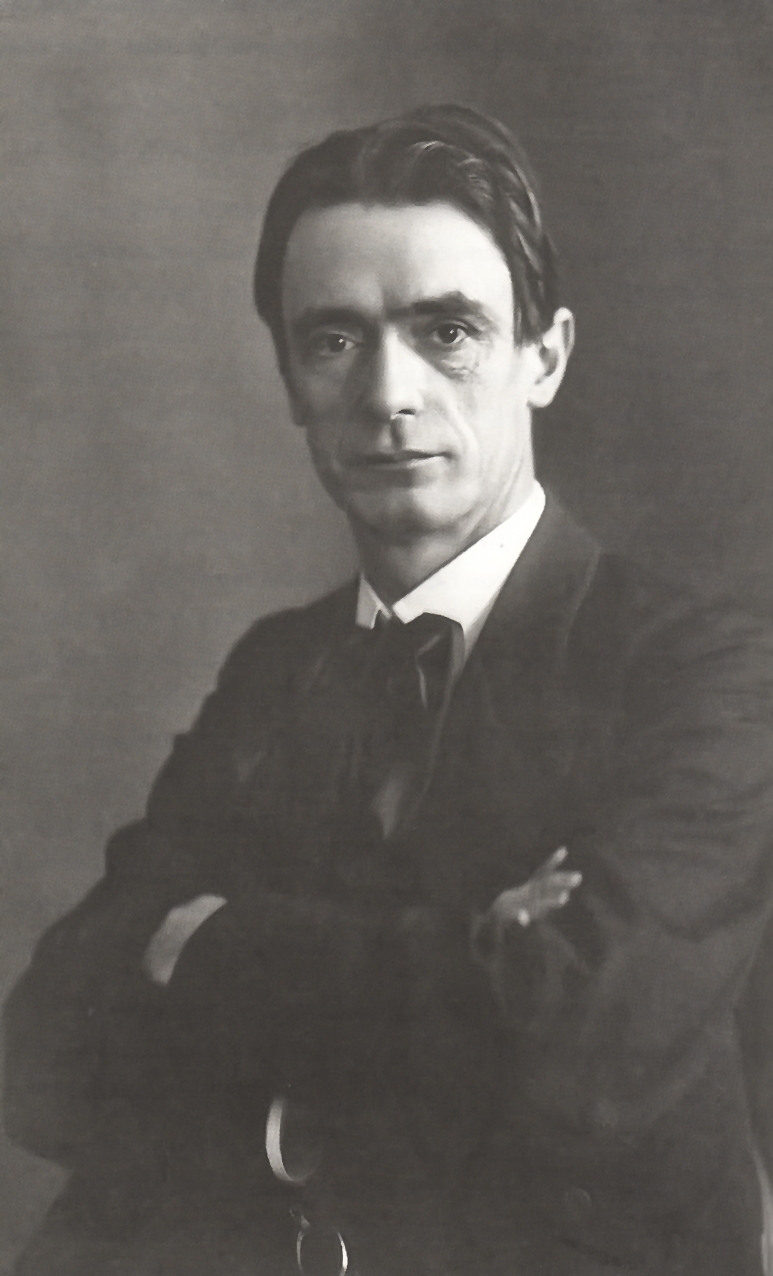
Both Maria Montessori and Rudolf Steiner were working in the early twentieth century, both dissatisfied with the rigid, authoritarian education of their time, and both convinced that children's development required something fundamentally different. But their diagnoses of what children needed and their proposed remedies were different in ways that matter enormously for parents choosing between them. This guide explains those differences clearly, without advocating for either approach as universally superior.
The philosophical foundations
Montessori: scientific observation and the child's natural development
Maria Montessori was a physician and scientist. Her philosophy was built on careful, systematic observation of children across different ages, cultures, and settings, looking for what children consistently showed they needed when given freedom to develop without adult interference. Her method is empirically grounded: it makes claims about what children learn and how they develop that are intended to be testable and observable. When the research on Montessori education has been done carefully, the results have generally been supportive of the method's claims.
The Montessori world is physical, concrete, and rational. Materials work because they are mathematically precise and pedagogically sequenced. The child's development is understood in terms of developmental stages, sensitive periods, and the absorbent mind: concepts grounded in observation, not metaphysics.
Waldorf: spiritual philosophy and artistic development
Rudolf Steiner was a philosopher and mystic, and the Waldorf curriculum is rooted in his anthroposophical philosophy, a spiritual worldview that includes beliefs about reincarnation, karma, and the spiritual nature of the child. Waldorf education is explicitly designed to support the development of the child's spiritual, artistic, and intellectual capacities in a sequence that Steiner believed reflected the soul's journey.
Many families who choose Waldorf schools are not particularly invested in anthroposophy and are attracted primarily by the arts-rich, technology-free, nature-centered environment. The philosophical underpinnings are not always explicit in how Waldorf schools present themselves. Understanding them is nonetheless relevant to understanding why the curriculum is designed the way it is.
The classroom environment
Montessori
The Montessori classroom is ordered, light, and purposefully arranged around specific learning materials. There are usually open shelves of precisely designed materials, low tables and chairs, and a clear visual organization that communicates the different curriculum areas. The aesthetic is minimalist and functional: beautiful but not fanciful. Natural materials are preferred, but the emphasis is on precision and clarity rather than softness or warmth.
Waldorf
The Waldorf early childhood classroom is warm, soft, and home-like. Natural materials are emphasized strongly: silk, wood, wool, beeswax. The colors are gentle and muted. Toys are often simple and deliberately unfinished in their appearance, encouraging the child's imagination to complete them. A wooden block might be a car, a boat, a person, or anything else. There is no prescribed use. The classroom is designed to feel like an idealized home environment rather than an educational facility.
The daily schedule
Montessori
The Montessori primary classroom centers on the long uninterrupted work period, typically two to three hours in the morning, during which children choose their own activities and move through them at their own pace. Adult-directed group lessons are brief and occur within the work period as needed. The day has a clear rhythm, but it is defined by the child's work choices rather than a teacher-directed schedule.
Waldorf
The Waldorf early childhood day follows a highly structured, rhythmic cycle: an opening verse or song, indoor free play, cleanup, snack preparation (which children participate in), snack, outdoor play, a circle time of songs, verses, and stories. The same rhythm repeats every day, and the same stories and songs repeat within each week, intentionally. Repetition and predictability are central Waldorf values, based on Steiner's belief that young children need rhythm above all else in their early years.
Academic curriculum: when and how
Montessori
Montessori introduces literacy and numeracy early, following the child's readiness rather than a fixed age. Many Montessori children begin reading between four and five, because the materials, including the Sandpaper Letters and the Movable Alphabet, systematically build the knowledge and skills required. The Montessori approach is not "earlier is always better," but it does not delay academic work to a fixed age.
Waldorf
Waldorf delays formal academic instruction deliberately until around age seven, the beginning of first grade. Before that age, Steiner believed that the child's energy is occupied with physical development and should not be diverted into intellectual work. Play, stories, movement, and artistic activity are the entire curriculum of the early years. Reading and writing are typically not introduced until first grade. Families considering Waldorf kindergarten should be aware that their child will not be doing literacy or numeracy activities in any formal sense.
Technology and media
Both Montessori and Waldorf share a skepticism about technology for young children, though for somewhat different reasons. Montessori's concern is developmental: screens do not provide the hands-on, physically grounded experience that the absorbent mind needs. Waldorf's concern is also partly spiritual: screens interfere with the quality of attention and the inner life that Waldorf education is trying to cultivate. In practice, both approaches strongly discourage screens for young children, and many Waldorf families extend this commitment to much later ages than Montessori families typically do.
The teacher's role
Montessori
The Montessori guide is a careful observer who introduces materials at the right developmental moment, steps back, and allows the child to direct their own learning. The guide is not the center of the classroom. The materials are. The guide's interventions are targeted and minimal, based on ongoing observation of each child's needs and progress.
Waldorf
The Waldorf teacher is the center of the classroom. In elementary school, the same teacher stays with their class for eight years (the "looping" model). The teacher's warmth, artistic gifts, and spiritual connection to the child are understood as the primary source of the educational experience. The relationship between teacher and child is central in a way that is different from the Montessori model, where the environment and materials hold more of the educational function.
Which is better?
The honest answer is that neither is universally better. They attract different families and serve different children best. Montessori tends to suit children who are intellectually curious, independently motivated, and ready for concrete, self-directed engagement with materials. It suits families who value academic preparation and evidence-based practice. Waldorf tends to suit children who are artistically oriented, who need a warm and highly predictable environment, and whose families are drawn to a holistic, spiritually grounded approach to childhood. It suits families who are prepared to defer formal academics and who value the arts above intellectual development in the early years.
Both methods are significantly better for most children than the conventional schooling they are alternatives to. The right choice depends on the specific child, the specific family's values, and the specific school being considered, not on the method's name alone.
The most important variable
Whether a child thrives in a Montessori or Waldorf school depends less on the method than on the quality of the specific school's implementation. A mediocre Montessori school is inferior to an excellent Waldorf school. A mediocre Waldorf school is inferior to an excellent Montessori school. Before choosing based on methodology, visit the actual school, observe an actual classroom, and evaluate the quality of the educators and the environment you find. The philosophy is only as good as the people implementing it.