
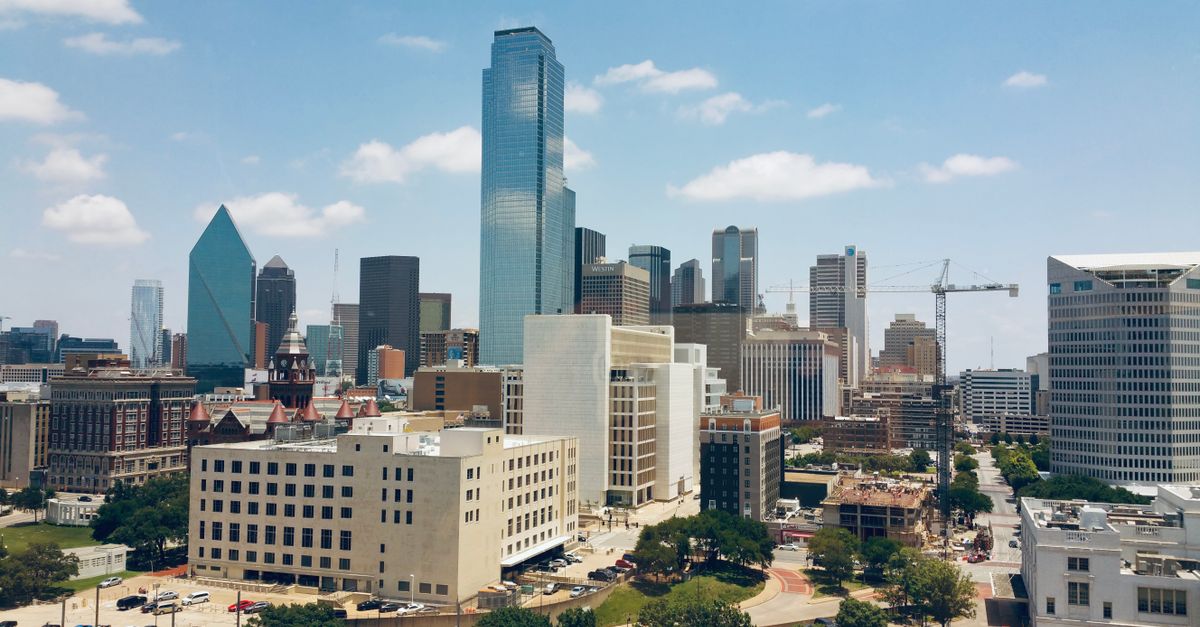
Dallas-Fort Worth is one of the fastest-growing major metro areas in the country, driven by a steady stream of corporate relocations and headquarters moves into North Texas over the past decade. That growth has fed demand for school choice broadly, and Dallas Independent School District has responded, in the Montessori space specifically, by building out one of the largest public Montessori magnet networks of any district in the country, rather than concentrating Montessori access in one or two flagship campuses.
Quick Facts: Montessori in Dallas
| What to Know | In Dallas-Fort Worth |
|---|---|
| Notable public options | George B. Dealey Vanguard Academy and Harry Stone Montessori Academy (both PK4-8, Dallas ISD), plus Downtown Montessori at Ida B. Wells and Prestonwood Montessori at E.D. Walker |
| Typical private tuition | Metro average around $16,890/year, above both the Fort Worth-area average (about $15,309) and the Texas statewide average |
| AMI/AMS training locally | Montessori Institute of North Texas (MINT), AMI-approved, Infant/Toddler through Elementary |
| Distinctive local factor | Montessori magnets are deliberately spread across North, South, East, West, and downtown Dallas; occasional winter ice storms (including February 2021) can close schools, narrowing the outdoor season versus Gulf Coast Texas cities |
The Montessori Landscape in Dallas
What distinguishes Dallas from most other large US districts is the sheer number and geographic spread of its public Montessori magnet campuses. Dallas ISD runs Montessori programs in North Dallas, South Dallas, East Dallas, West Dallas, and downtown, rather than a single centrally located flagship school. That spread matters practically: a family's realistic Montessori options often depend more on which part of this large, sprawling city they live in and commute through than on income or private-school budget, since a tuition-free public option may be genuinely close to home in several different Dallas neighborhoods.
Climate and Outdoor Life for Dallas Montessori Families
Dallas sits at the boundary between the humid subtropical climate of the Gulf Coast and the more continental climate of the southern Plains, which gives it more distinct seasonal variation than Houston or San Antonio. Summers are hot, regularly into the upper 90s°F, calling for the same morning-shifted outdoor practical-life scheduling common across Texas. But Dallas also sees real winter cold snaps and, in some years, significant ice storms, including the widely reported statewide freeze of February 2021, that can close schools for days at a time. A Montessori classroom's outdoor gardening and practical-life calendar in Dallas typically runs strongest in spring and fall, with both summer heat and occasional winter ice narrowing the outdoor window compared with cities further south and east in Texas.
Public Montessori Options in Dallas
Dallas ISD's core Montessori magnet campuses are George Bannerman Dealey Vanguard Academy and Harry Stone Montessori Academy, both serving pre-K4 through eighth grade. Dealey has posted state proficiency rates around 83% in math and 89% in reading, placing it among the top-ranked magnet schools in the district. The district has also added newer Montessori options, including Downtown Montessori at Ida B. Wells, aimed at families who live or work in downtown Dallas, and Prestonwood Montessori at E.D. Walker in a northwest Dallas neighborhood. Because these are magnet campuses, admission generally runs through Dallas ISD's magnet application and lottery process rather than automatic neighborhood assignment, and demand for established campuses like Dealey and Harry Stone tends to be high, so apply early and confirm current deadlines directly with the district.
Private Montessori Schools in Dallas
Dallas also supports a substantial private Montessori sector, and the metro is home to the Montessori Institute of North Texas, an AMI-approved teacher-training center offering coursework across Infant and Toddler, Primary, and Elementary levels. As in Houston, that local training capacity means a meaningful share of Montessori teachers working in North Texas classrooms may have trained close to home, which is worth asking about directly when you compare schools. Dallas is also home to some of the most expensive private schools in Texas overall, though those top-tier prep schools are generally not Montessori campuses; standalone Montessori schools in the metro tend to price well below that top tier, closer to typical private elementary tuition.
What Tuition Typically Looks Like Here
Average private-school tuition in Dallas runs above both the Fort Worth-area average and the statewide Texas average, reflecting the metro's higher cost of living and its concentration of well-funded independent schools. Typical elementary tuition at a Dallas-area private school spans roughly the mid five figures to the high teens per year, with the most prestigious college-preparatory schools charging well above $30,000 annually; Montessori-specific schools generally sit toward the lower-to-middle part of that range rather than at the very top. Dallas ISD's Montessori magnet campuses, by contrast, remain fully tuition-free, which is the clearest cost differentiator in this market. For more detail on how these figures compare nationally, see our guide to Montessori school cost.
How to Find an Accredited School Near You
With Montessori campuses spread across so many different parts of Dallas and its suburbs, verifying accreditation and confirming which specific magnet zone or lottery pool applies to your address are both essential first steps. Use the official locators: the AMI/USA school locator, the American Montessori Society (AMS) school locator, and the National Center for Montessori in the Public Sector (NCMPS). Our guide on how to find a Montessori school walks through what to evaluate on a visit, and our comparison of AMI vs. AMS explains what each accreditation actually verifies.
Geography decides more than you'd expect in Dallas
Because Dallas ISD's Montessori magnet campuses are deliberately spread across the city rather than clustered in one area, the single most useful early step is mapping which campuses are realistically reachable from your address and daily commute, before you compare curricula or ratings. A highly rated campus across town may be a far less practical choice than a solid one ten minutes away.